

District Heating explained
-
Costs
All costs associated with heating or cooling your home are included in your tariff- including maintenance, repairs, servicing and insurance.
-
Local generation
Heat and hot water is generated in a local energy centre and is then transported through a network of pipes to all properties connected to the network
-
Efficiency
Economies of scale make heat networks more efficient than multiple gas boilers.
Example of how a district heating network operates

District heating transports heat directly into your home through a network of highly efficient underground pipes.
It removes the need for you to own, maintain, insure or replace a traditional boiler. The heat is available to you 24 hours a day, 7 days a week; you just pay for what you use to heat or cool your home and water.
The network will supply heat with carbon emissions lower than the equivalent heat supplied by individual gas boilers.
The water in a district heating network is entirely separate from the water circulating in your home.
The HIU looks much like a conventional gas boiler. You set the programmer controls for the system’s start/stop times and thermostat temperatures, just as you would with a traditional central heating system.
If the HIU goes wrong we can repair or replace it for you. Everything in your home beyond the HIU is your responsibility to look after – things like pipes, radiators, thermostatic valves, showers or underfloor heating.
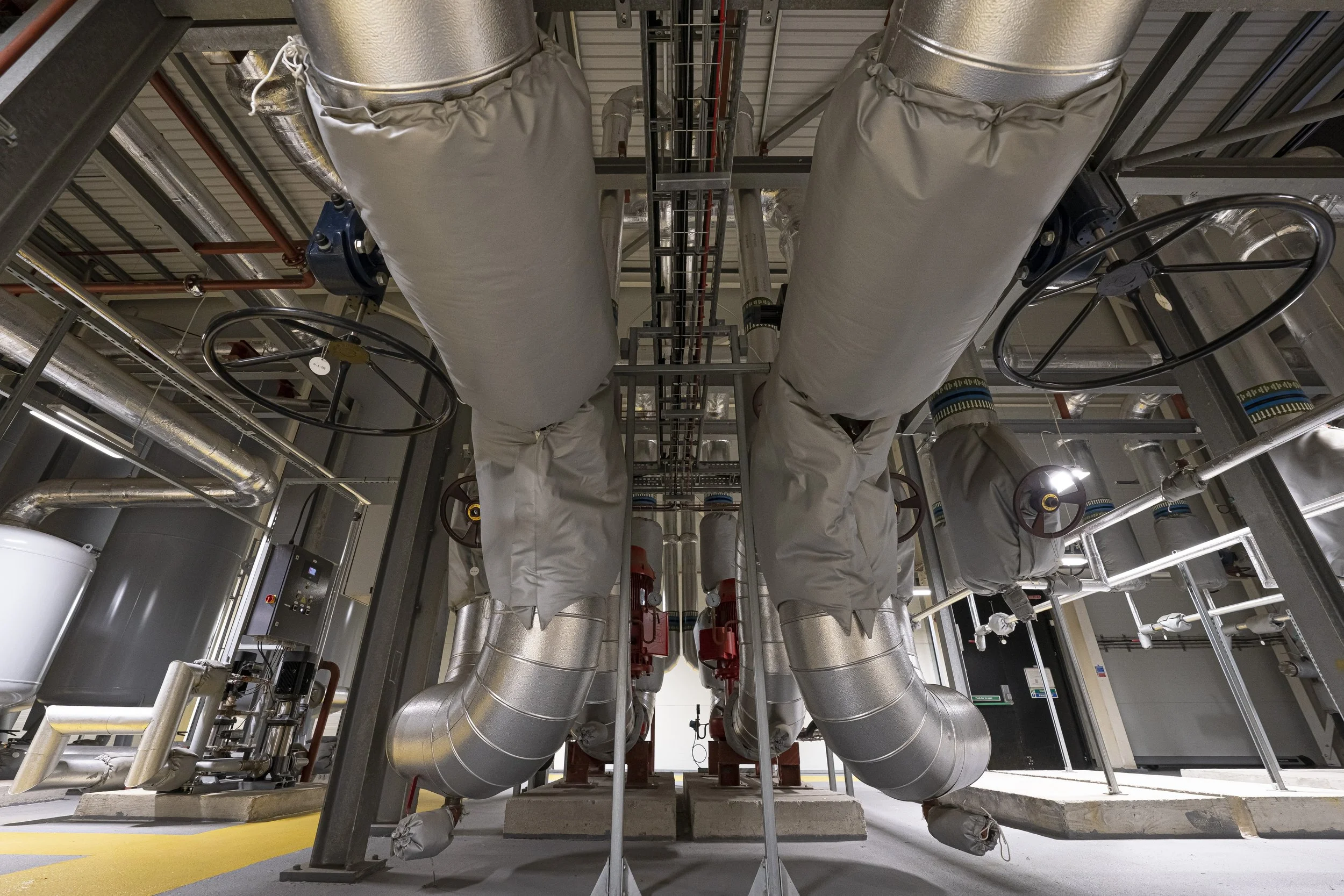
A district heating system is just as reliable as the other utilities you are used to such as gas, electricity and water.
In fact because district heating systems operate in a compact area, constantly monitored and under our complete control.
A district heating system can be designed to accept multiple sources of heat supply, have excess heat capacity, permanent standby boilers, and thermal storage. All of this can ensure that you should have a lower breakdown risk than if you had a conventional gas boiler.